cloud
July 26, 2026

Multi-Cloud Strategies Dominate as 89% of Enterprises Use Multiple Providers

Enterprise multi-cloud adoption reaches 89% as organizations leverage best-of-breed services from AWS, Azure, and Google Cloud for optimal performance.
Source: Flexera
By Rachel Kim
Multi-Cloud Strategies Dominate as 89% of Enterprises Use Multiple Providers

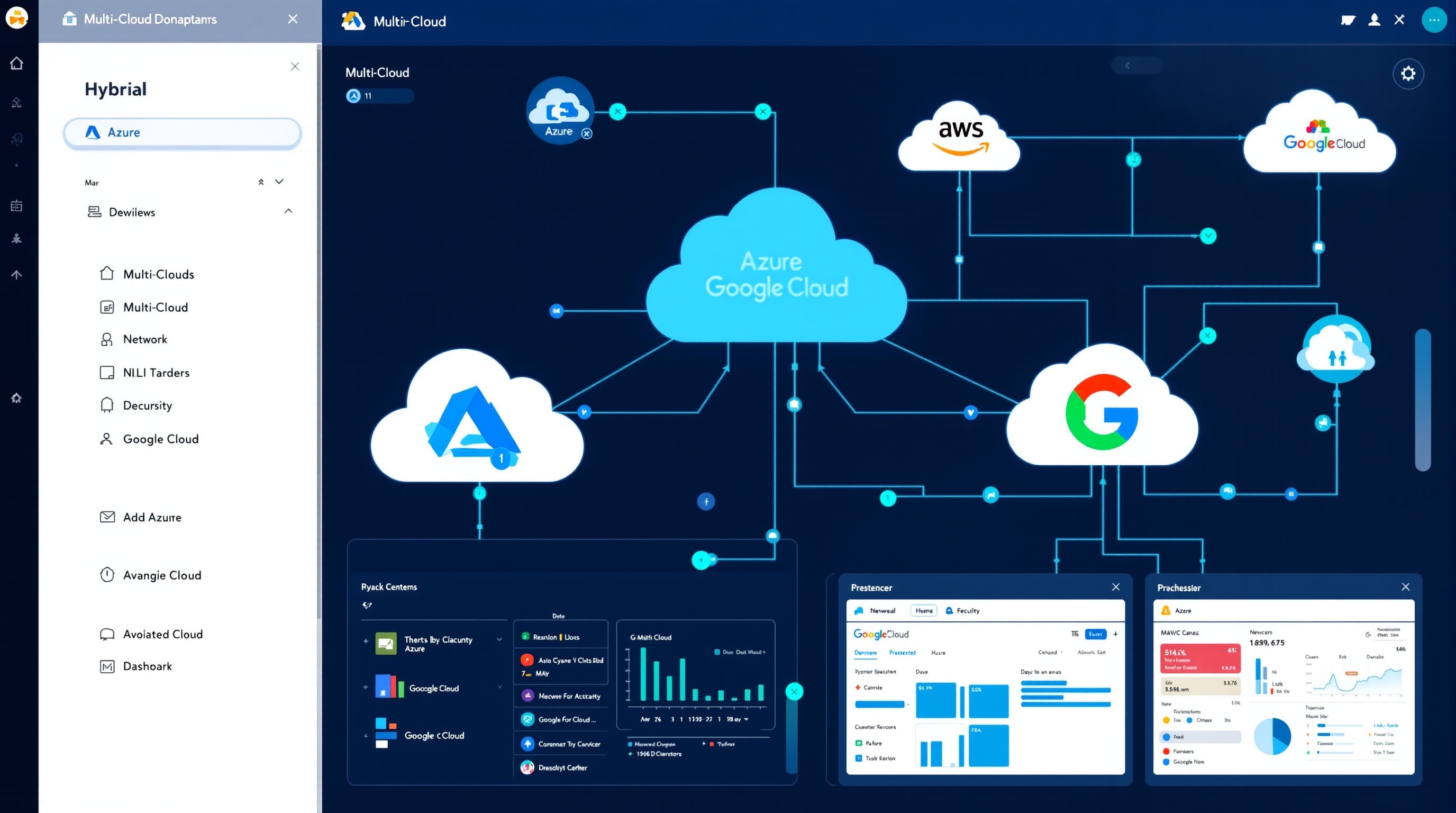
Multi-cloud strategies have become the enterprise standard, with 89% of organizations now utilizing services from multiple cloud providers according to Flexera's 2026 State of the Cloud Report.

The trend reflects organizations' desire to avoid vendor lock-in, optimize costs, and leverage specialized capabilities from different providers. AWS leads in infrastructure services, Azure dominates in enterprise integration, while Google Cloud excels in data analytics and AI workloads.

"Multi-cloud is no longer a choice but a necessity for enterprise agility," explained Mark Stevens, Cloud Strategy Director at Accenture. "Organizations need the flexibility to deploy workloads where they perform best and cost least."

However, multi-cloud complexity remains a challenge, with 67% of organizations citing management overhead as a primary concern. This has driven demand for cloud management platforms from vendors including VMware, HashiCorp, and Flexera that provide unified visibility and control.

The global cloud infrastructure market is projected to reach $247 billion in 2026, with hybrid and multi-cloud solutions representing 72% of enterprise deployments. Organizations report average cost savings of 23% through optimized multi-cloud strategies.

Source Attribution

Source: Flexera

Author: Rachel Kim

Article curated and published by CloudStack Networks
Related Topics

Multi-Cloud
Cloud Strategy
AWS
Azure
Google Cloud

Related Articles

Oracle OCI Enterprise AI Expands with Private Endpoints, GLM 5.2 Support, and Agentic AI Certification as Enterprises Demand Governance at Scale
cloud

Oracle OCI Enterprise AI Expands with Private Endpoints, GLM 5.2 Support, and Agentic AI Certification as Enterprises Demand Governance at Scale

Oracle Cloud Infrastructure's July 2026 Enterprise AI updates introduce private endpoints for imported models, support for GLM 5.2 and seven additional models including DeepSeek V4 and Kimi K2.7, image moderation via AI Guardrails, and a new Oracle Agentic AI Foundations certification—addressing enterprise demand for secure, governed AI infrastructure as agentic workloads move to production.

Google Cloud Posts 82% Revenue Growth in Q2 2026 as Gemini Reaches 950 Million Users and $514 Billion Contract Backlog Signals AI Infrastructure Dominance
cloud

Google Cloud Posts 82% Revenue Growth in Q2 2026 as Gemini Reaches 950 Million Users and $514 Billion Contract Backlog Signals AI Infrastructure Dominance

Google Cloud reported $24.8 billion in Q2 2026 revenue—82% year-over-year growth accelerating from 63% in Q1—driven by enterprise AI adoption with Gemini Enterprise used by nearly 90% of Fortune 100 companies, 22 billion API tokens processed per minute, and a $514 billion sales backlog, as Alphabet raised its 2026 capital expenditure guidance to $195-205 billion.

Oracle and Google Cloud Expand Enterprise AI Infrastructure as Hybrid Cloud Becomes Default Operating Model for 73% of Organizations
cloud

Oracle and Google Cloud Expand Enterprise AI Infrastructure as Hybrid Cloud Becomes Default Operating Model for 73% of Organizations

Oracle Cloud Infrastructure expanded its Enterprise AI model imports to include GLM 5.2 and OpenAI Whisper Large V3 Turbo while enhancing AI Guardrails, as Google Cloud promoted "Prompts-as-Code" architectures and its Agentic Data Cloud—amid new research showing 73% of organizations now rely on hybrid cloud models and 84% cite cost management as their top challenge.