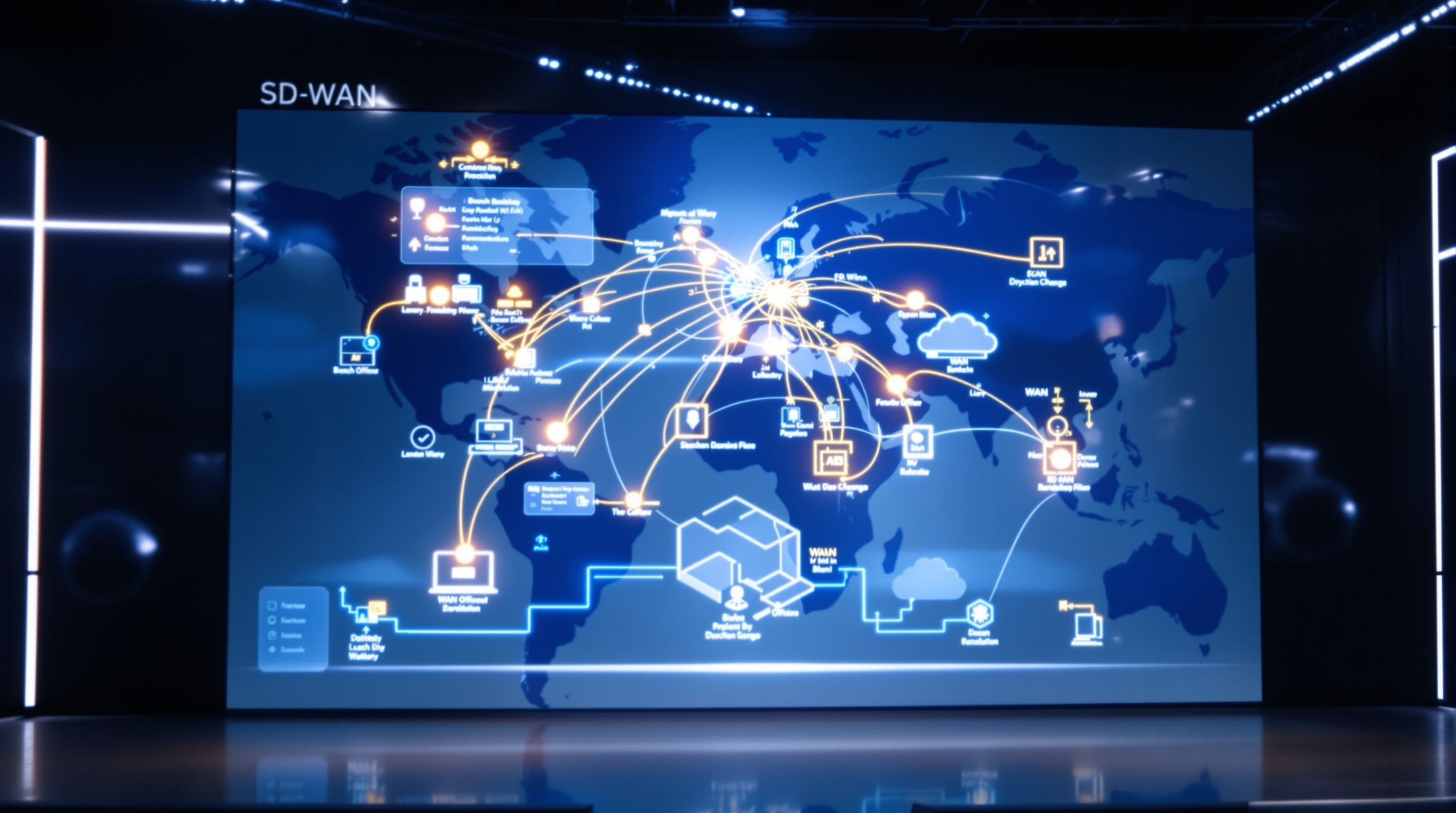
Enterprise Networks Unprepared for AI Era as Only 15% Have AI-Ready Infrastructure, Cisco Accelerates Refresh Cycle
New industry analysis reveals that only 15% of enterprise organizations have networks flexible enough to support AI workloads at scale, prompting Cisco to prioritize AI-ready infrastructure in its 2026 roadmap while SONiC-based switching revenue is projected to surpass $5 billion as Ethernet displaces proprietary AI cluster interconnects.

A critical infrastructure gap has emerged at the intersection of enterprise AI ambition and network readiness: new industry analysis published in mid-2026 reveals that only 15% of organizations possess networks flexible enough to support AI workloads at scale. The finding has significant implications for enterprise IT teams and MSPs, as the gap between AI adoption timelines and network modernization cycles threatens to become a primary bottleneck for organizations seeking to realize value from their AI investments.
The enterprise networking market is projected to grow from approximately $94.82 billion in 2026 to $127.73 billion by 2030, driven by the need for AI-powered network optimization, edge computing integration, and Zero Trust security architecture implementation. However, the growth trajectory masks a fundamental readiness problem: AI workloads generate traffic patterns—characterized by high bandwidth, low latency requirements, and bursty east-west flows between accelerator clusters—that are fundamentally different from the north-south traffic patterns that most enterprise networks were designed to handle.
Cisco has responded to the readiness gap by making AI-ready infrastructure the centerpiece of its 2026 product strategy, refreshing its core switching and router portfolios to handle the demands of distributed AI inference. The company's approach emphasizes end-to-end observability that correlates identity, API behavior, and application traces—a capability that traditional packet-counting tools cannot provide and that is essential for troubleshooting performance degradations in AI-dependent workflows.
Ethernet has emerged as the de-facto standard for AI cluster interconnects, with 800GbE switch revenues surging as the technology expands from back-end networking into scale-up applications, competing directly with proprietary solutions like NVIDIA's NVLink. The SONiC open-source network operating system is seeing particularly strong adoption momentum, with data center switching revenue based on the platform expected to surpass $5 billion in 2026, driven by hyperscalers and increasing enterprise adoption for edge inference deployments.
A new category of "shadow traffic" has emerged as a significant operational challenge: autonomous AI agents and AI copilots generate network activity that is difficult to monitor because it often rides on top of sanctioned SaaS applications. Security teams face a tension between the need to inspect AI prompts—which may contain sensitive data—and the requirement for low-latency performance. Overly restrictive inspection points are driving users toward unsanctioned alternatives, prompting a shift toward identity-aware, policy-based routing as the preferred governance mechanism.
The skills gap compounds the infrastructure readiness problem. There is a pronounced shortage of professionals capable of managing the intersection of cloud platforms, AI, and network security, and organizations are increasingly willing to pay a premium for senior-level networking professionals who can align technical infrastructure with AI-driven business objectives. For MSPs, this skills scarcity represents both a service delivery challenge and a significant market opportunity for managed AI-ready networking services.
Source Attribution
Source: NetworkWorld / Research and Markets / WindowsForum
Author: CloudStack Networks Editorial
Article curated and published by CloudStack Networks