Hyperscalers Race to $700B AI Infrastructure Spend as Cloud Market Hits $500B Run Rate and Power Constraints Reshape Data Center Geography
The global cloud infrastructure market has reached a $500 billion annual revenue run rate as hyperscalers target $700 billion in 2026 AI infrastructure investment — nearly double 2025 levels — while KKR warns of a "massive power shortage" forcing data center developers to pursue on-site power generation and reshaping where AI capacity can be built.
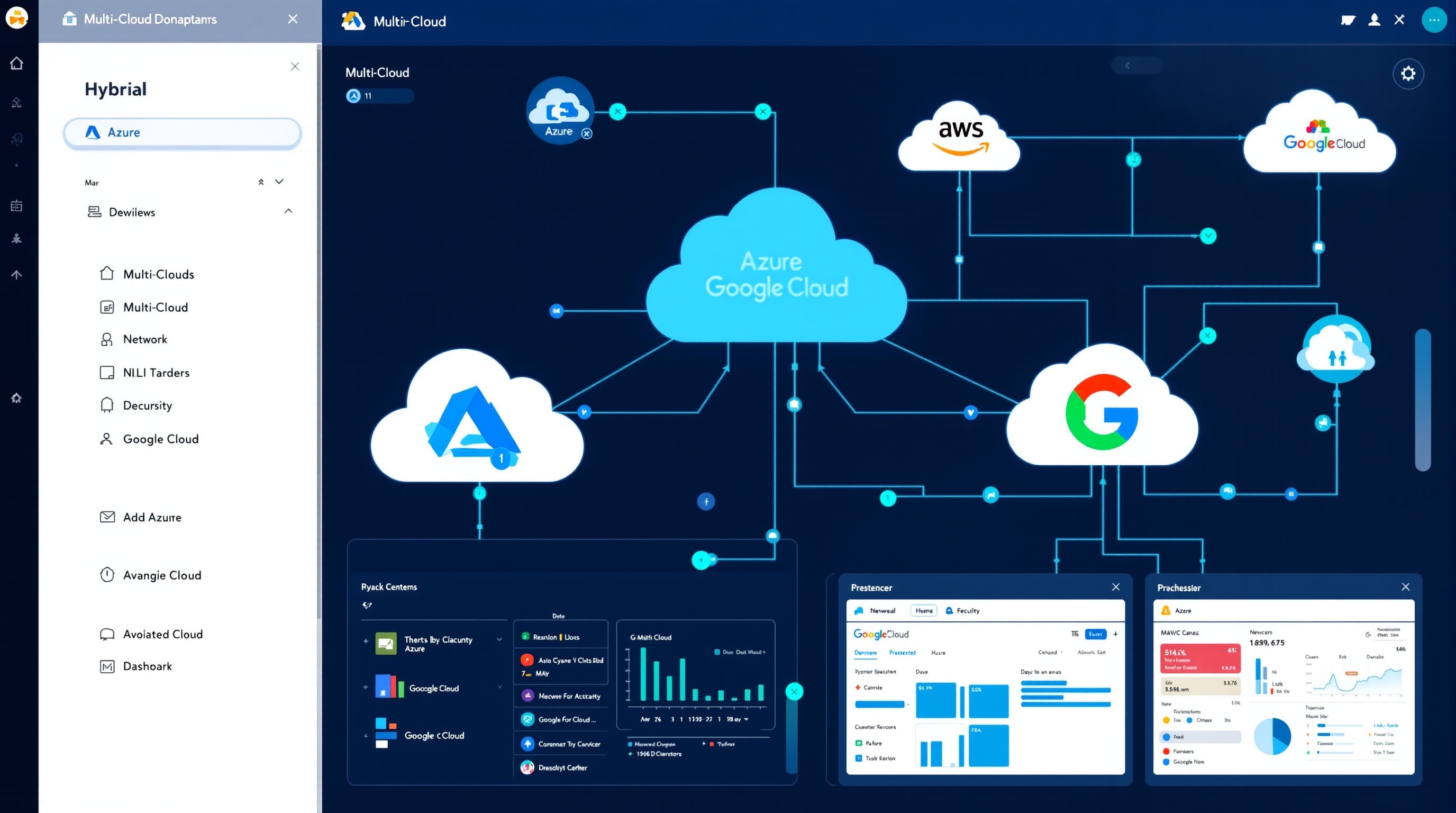
The global cloud infrastructure market has achieved a landmark $500 billion annual revenue run rate in 2026, fueled by the aggressive integration of AI across infrastructure-as-a-service, platform-as-a-service, and software-as-a-service models. The top four hyperscalers — Amazon Web Services, Microsoft Azure, Google Cloud, and Oracle Cloud Infrastructure — are on track to invest approximately $700 billion in AI infrastructure this year, nearly double their 2025 capital expenditure levels, as the race to build AI-ready compute capacity intensifies.
KKR executives have characterized the infrastructure constraint environment as a "massive power shortage," noting that even the slowest-growing hyperscalers expect to double their cumulative capacity over the next two years while the fastest-growing entities are planning even steeper expansion trajectories. This power availability crisis is fundamentally reshaping the geography of AI infrastructure investment, with data center developers increasingly prioritizing power access over traditional site-selection factors like fiber proximity or latency optimization.
The "power-first" paradigm has driven the emergence of "on-site bridging" strategies, where developers deploy dedicated power generation assets — including temporary diesel generation, advanced gas turbines, and increasingly, small modular nuclear reactors — to bypass utility grid delays that can extend 3-5 years in constrained markets. Vertiv and Wärtsilä are central to this shift, providing the liquid cooling systems, thermal management infrastructure, and power distribution equipment required for high-density AI-ready data centers. Wärtsilä reports that its engine production capacity is largely booked through 2028, with firm orders beginning to extend into 2029.
CoreWeave, the specialized AI cloud provider, now operates 43 AI data centers as of June 2026, representing one of the most aggressive capacity expansion programs in the neocloud sector. The company's GPU-optimized infrastructure has attracted enterprise customers seeking dedicated AI compute capacity outside the shared multi-tenant environments of traditional hyperscalers. Lambda and other neocloud providers are pursuing similar expansion strategies, collectively creating a new tier of AI infrastructure between enterprise on-premises deployments and hyperscaler public cloud.
The semiconductor supply chain underpinning this infrastructure expansion remains concentrated, with NVIDIA holding approximately 80% of the AI chip market. AMD, Broadcom, and Micron provide complementary capabilities in custom AI accelerators and high-bandwidth memory, while TSMC serves as the critical manufacturing backbone for advanced chips across all vendors. Google's eighth-generation Tensor Processing Units — the TPU 8t for training and TPU 8i for inference — and the Virgo Network data center fabric capable of connecting over one million TPUs across multiple sites represent the hyperscaler response to the infrastructure scaling challenge.
The telecommunications sector is navigating this AI infrastructure boom with mixed strategies. SK Telecom's early equity stake in Anthropic has led to its reclassification by market analysts as an "AI stock," illustrating how telcos that made early AI investments are capturing value beyond traditional infrastructure provision. Other operators are building GPU-as-a-Service clouds to monetize their existing network infrastructure and data center footprints, while some are attempting to move up the value chain into AI application development and managed AI services.
The three-tier hybrid architecture that is emerging as the enterprise standard — public cloud for elasticity, on-premises for predictable high-volume inference, and edge computing for latency-sensitive applications — reflects a pragmatic response to both the power constraints and the cost economics of AI workloads at scale.
Source Attribution
Source: RCR Tech / Built In / VOIP Review / Silicon Angle / Yahoo Finance
Author: CloudStack Networks Editorial
Article curated and published by CloudStack Networks